
Caterpillars in Winter?
How will they survive?

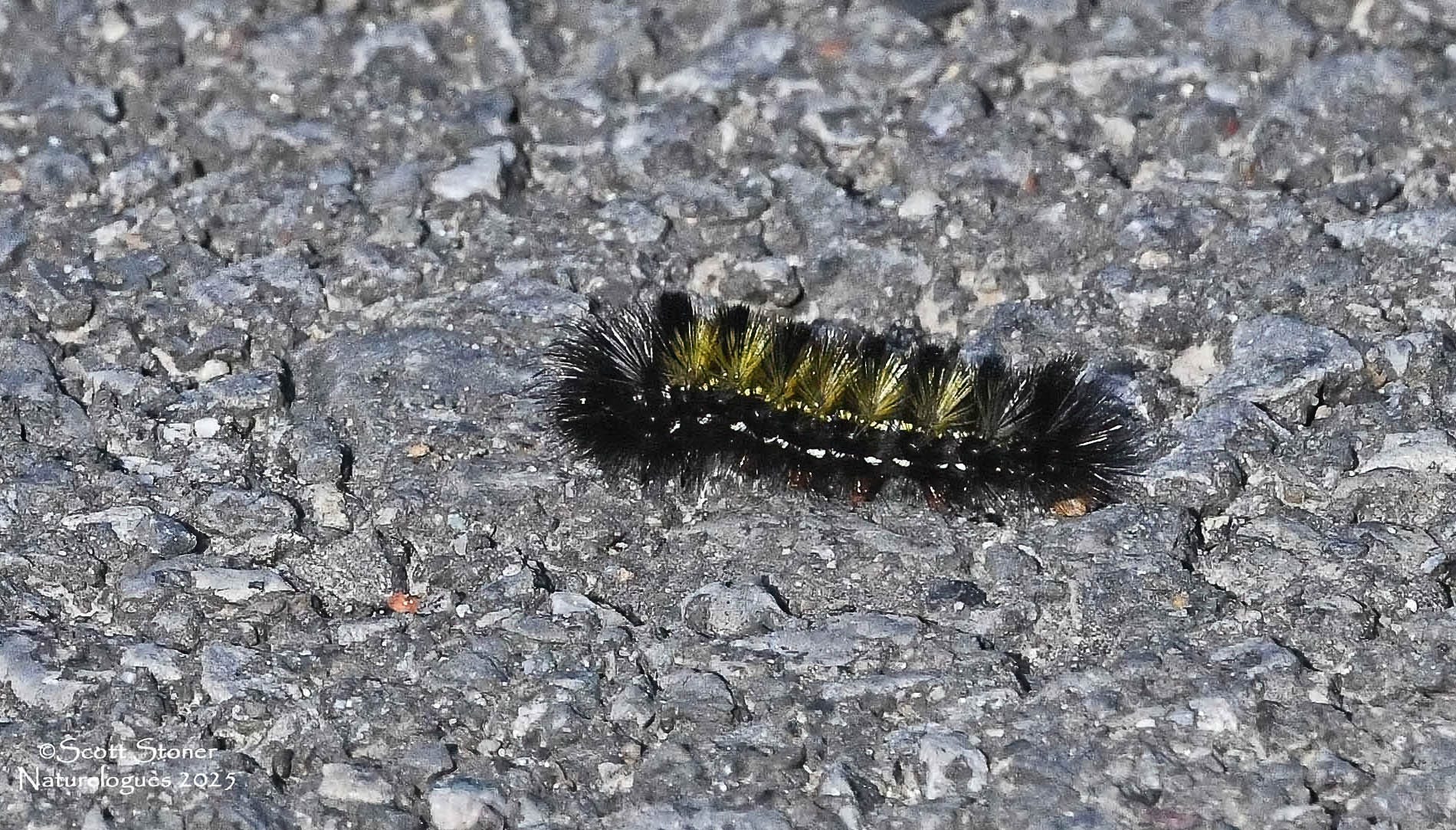
On December 1st, the first day of “meteorological” winter and the day before the first snowstorm of the year, I ran across a caterpillar crossing the road. It was the larva of the Virginia Ctenucha moth, a day-flying moth we see in the summer. But what was this caterpillar it doing out in December? Shouldn’t it have pupated by now? Could it even survive the winter?
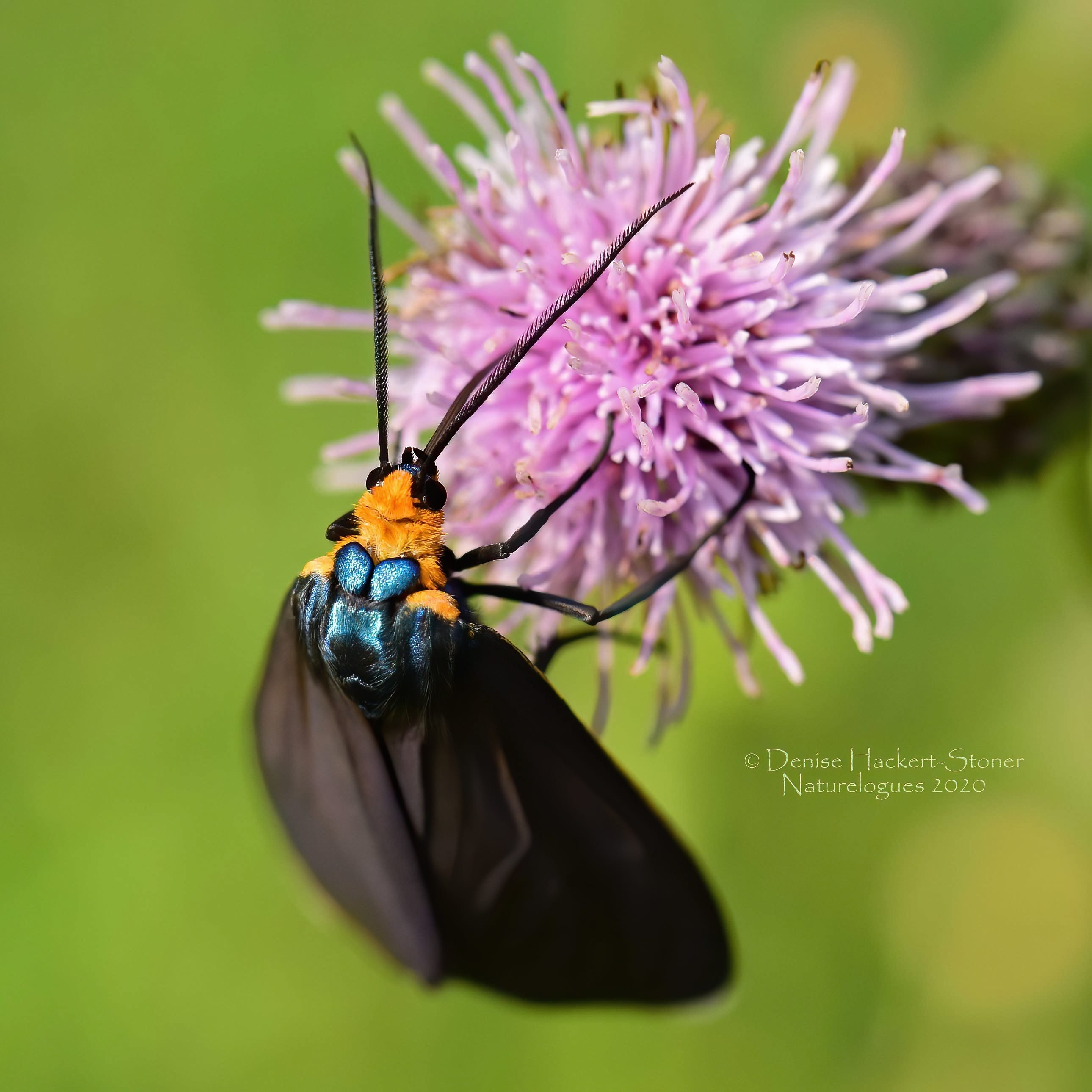
No worries…no, it shouldn’t have pupated, and it will likely be just fine overwintering as a caterpillar! Virginia Ctenucha larvae have a multifaceted “strategy” for surviving the winter. They shelter under leaf litter (please “leave your leaves”), matted grass or inside hollow stems of plants. They also enter a state of dormancy (diapause) which slows their metabolism. Lastly, they likely produce “cryoprotectants,” natural antifreeze such as the alcohol glycerol, or sugar alcohol sorbitol, which protect their cells from freezing or from damage by ice crystals if they do freeze.
Moths use a variety of approaches to survive the cold New York winters. Some, like the Inland Barrens Buckmoth, overwinter as eggs. Others, such as Cecropia, overwinter as pupae within cocoons. Another strategy is to winter as an adult, like the invasive Winter Moth of the family Geometridae.
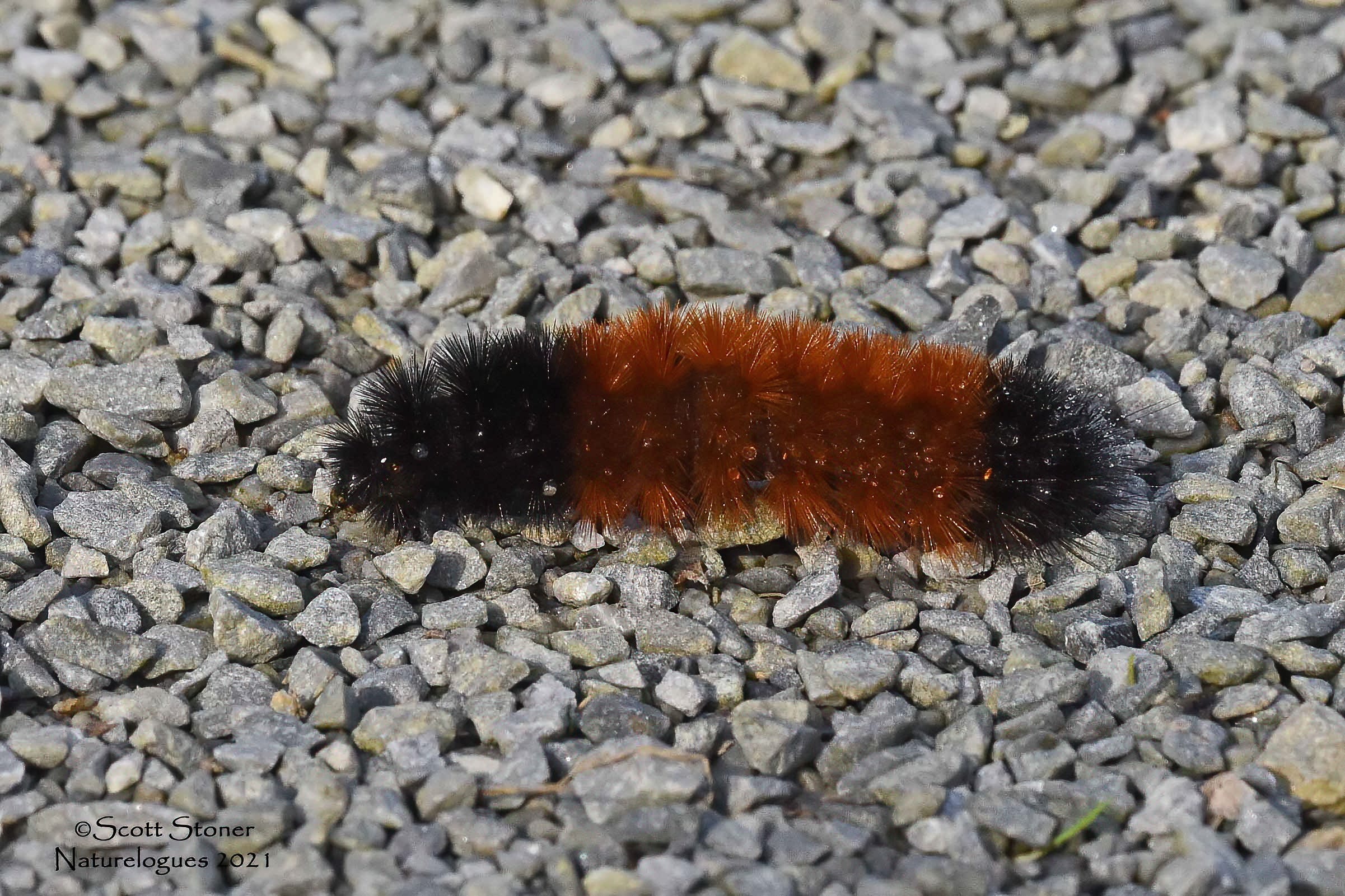
The Virginia Ctenucha’s approach to winter is not common, but is by no means unique. Other locally found moths also spend the winter as caterpillars, utilizing a similar mechanism of shelter, slowed metabolism, and natural antifreeze. Two of these are perhaps less familiar to us: Ruby Tiger Moth and Virginian Tiger Moth (aka Yellow Wooly Bear). One that is much more well known, and steeped in folklore of predicting winter severity, is the Banded Wooly Bear (or “Wooly Bear”), pictured below, which uses glycoproteins as cryoprotectants and freeze solid. After thawing out in the spring, they pupate and soon reach the adult stage of life as the indigenous Isabella Tiger Moth!
If you see a caterpillar this winter, please leave it alone and allow it to complete its wintertime portion of its life cycle!
Resources: for more information on the Banded Wooly Bear, please see https://wallkillvalleylt.org/2021/10/october-species-spotlight-isabella-tiger-moth-aka-the-banded-wooly-bear-caterpillar-and-the-spotted-lanternfly/
Fascinating! I saw some "wooly bears" as late as November, walking along the pavement, and I wondered whether they would survive.
I clicked on the link you provided, which included a story about the spotted lanternfly. Sadly, we saw them everywhere at Shenandoah National Park this summer.