
Why do Mockingbirds Sing at Night?
Mockingbird – Part 2

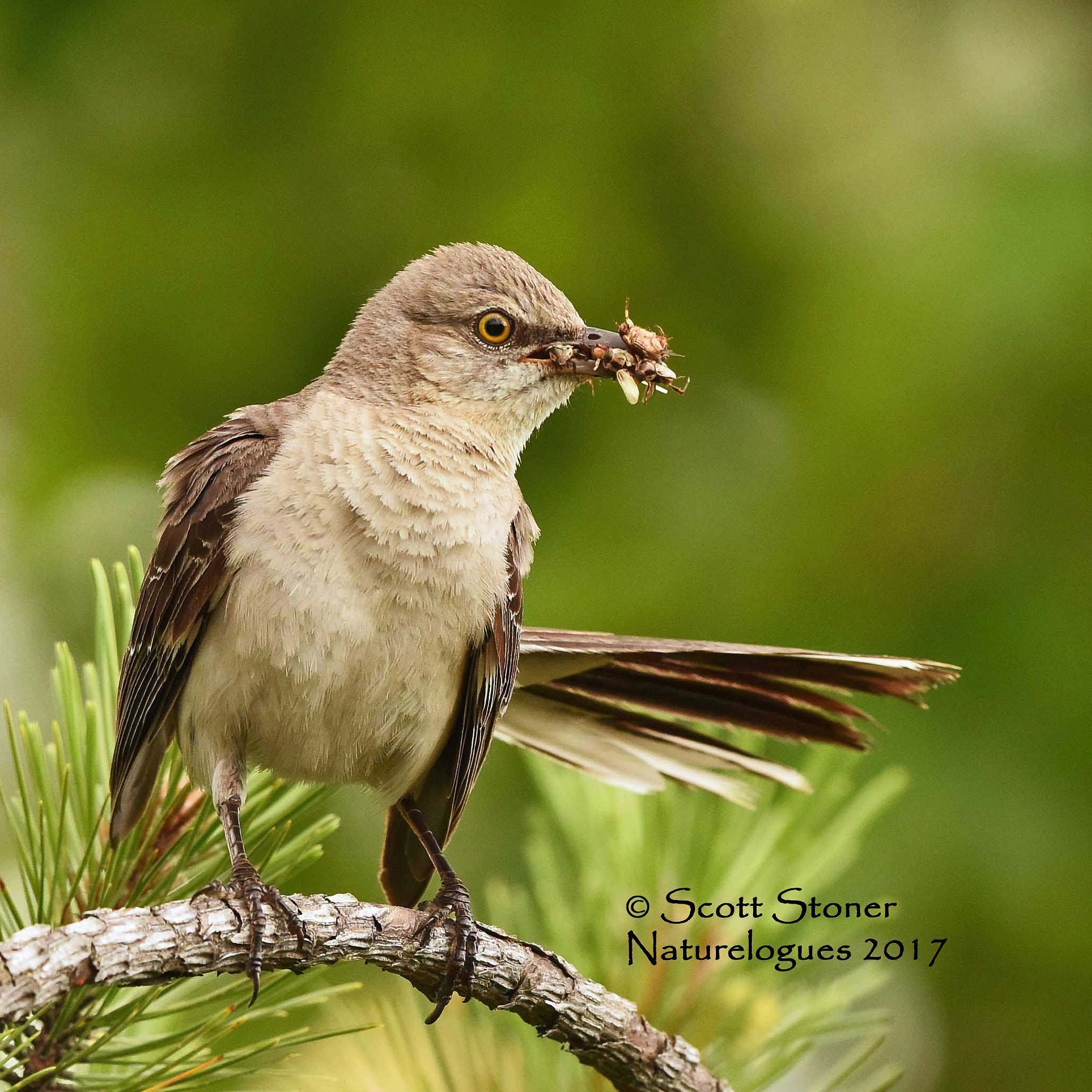
Why do Mockingbirds sing at night? This was posed to me on my oral final exam in Ornithology at the University of Arizona many years ago. Our professor had convened students in small groups for an oral final, and queried each of the four of us a variety of challenging questions for perhaps an hour. I’d never had an oral final before, and never had one again. Although I didn’t know the answer to this thought-provoking question, I did articulate at some length about bird song in an effort to convince him I knew something – and could think!
That question, planted in my mind so long ago, has remained with me. From time to time, I’ve researched possible explanations. While the answer doesn’t seem definitive, there are several plausible explanations. I wonder if the professor knew the answer back then in the 1980s, or just wanted to stir my thought process.
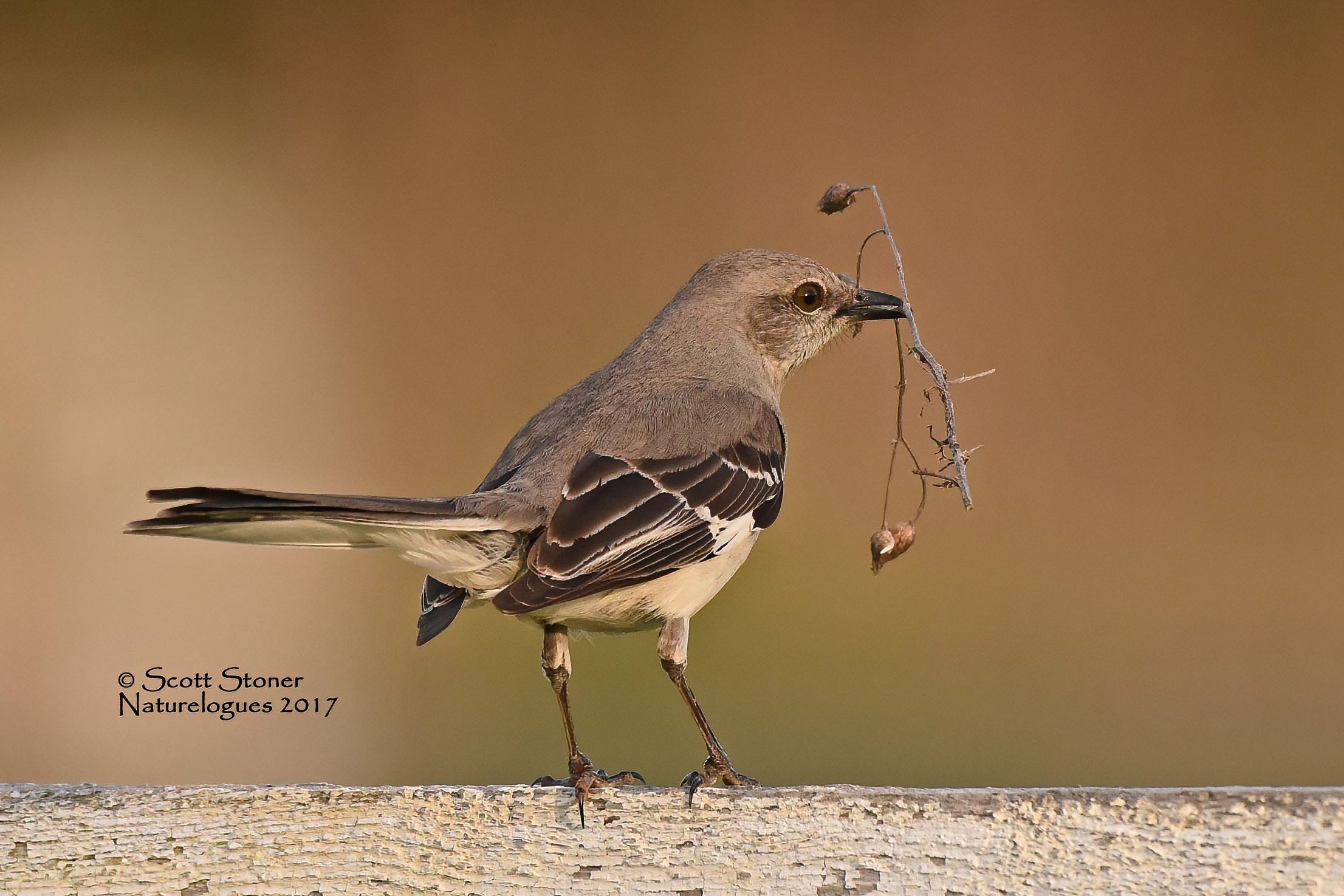
So why do Mockingbirds sing at night? For one, it can give the singer an advantage, as few or no other bird species sing at night. It’s quieter then, and their voices can be more easily heard. I’ve also read that it’s the younger males who sing at that time. More specifically, Cornell Lab states that “Mockingbirds that sing all night long tend to be young, still-unattached males or older males who have lost their mate.” This widely noted theory is further expanded by the explanation that nocturnal singing is mainly during breeding season and provides
a way to extend their search for a mate beyond daylight hours. This vocal competition with other males is also used for establishing and defending territory.
Unsurprisingly, Mockingbirds tend to sing more often on moonlit nights, and near streetlights or lights from buildings. The increased light may make it easier to find food or be more active.
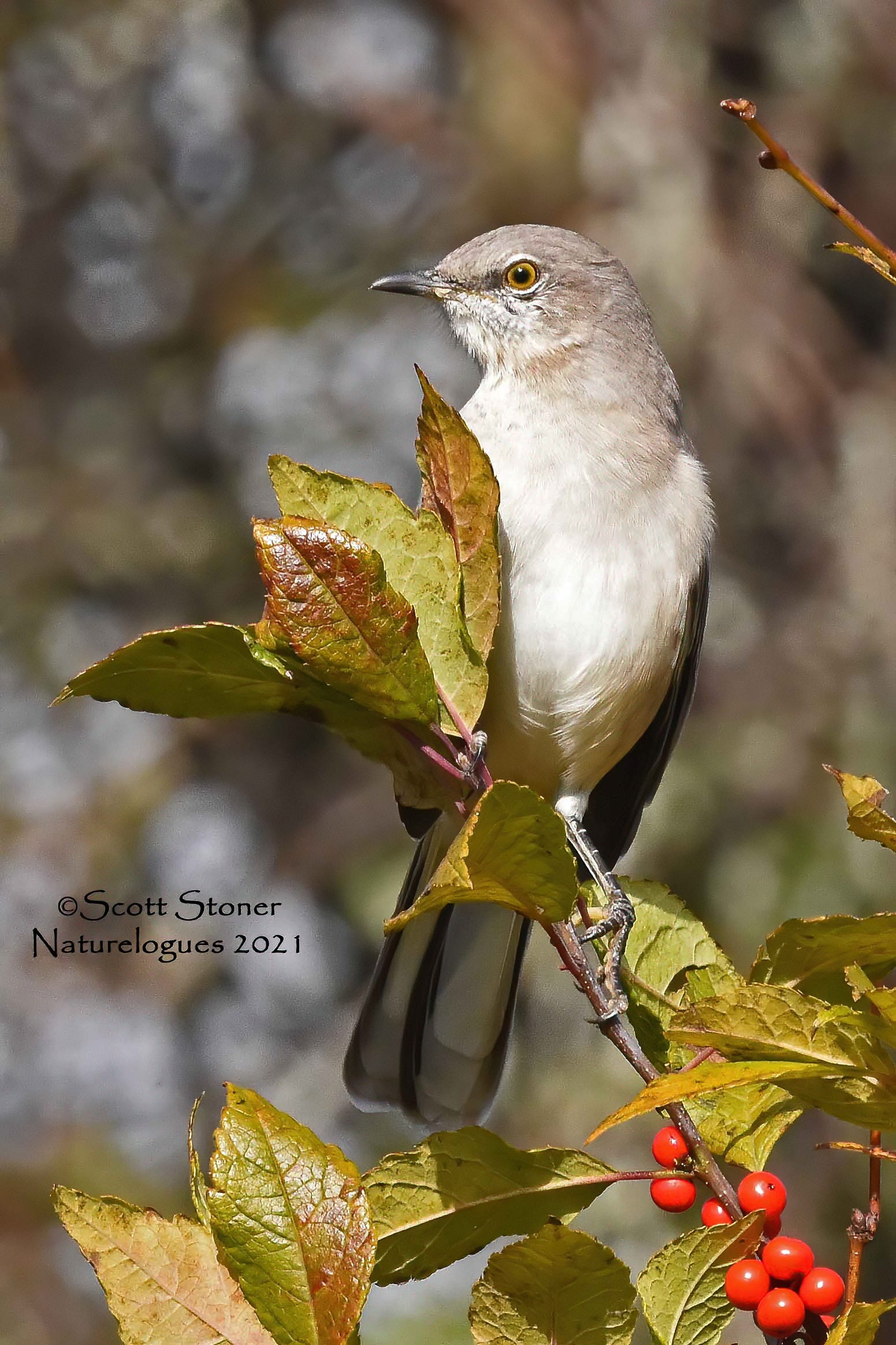
A separate question is why do Mockingbirds sing in the fall? The primary reason is to defend winter food territories, especially around food sources such as berry bushes. Last week, I wrote of the Mockingbird singing nearly every day in our front yard, and chasing other birds away from our berry-laden dogwood. Males and females both sing in the fall. Females may especially sing in the fall to establish winter feeding territories and males may do so to attract a mate for the spring, giving them a head start on breeding.
I now suspect that the question on my exam was not fully answerable years ago, and was only posed to make this student think. It’s still a valid question. Mockingbirds are fascinating singers, and it seems like we humans are just beginning to understand the inherent rationale for when and why they sing. May we enjoy their presence and their music as we continue to ponder and explore the reasons for their unique behaviors!
Robins will also sing by lamp light. We had that happen in Duluth, MN
I enjoyed this. I have wondered this too. Good teachers/professors often leave us with questions that linger, needing an answer, probably in hopes that one of us will eventually determine the answer.
I love mockingbirds and enjoy their hours of songs that can give Cornell's Merlin app a good workout. Thank you, Scott.